
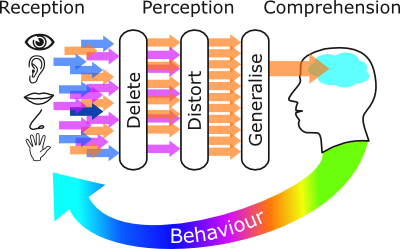
The fundamental principle of NLP is that our experience of reality is not created 'out there' in the world, it is created through a series of subjective processes so that we each create our own personal reality. Conflict arises when our separate subjective realities have no common ground and we are left unable to communicate with others. But how do we know what is being lost or changed as information enters our personal, individual experience?
Read more: Delete, Distort, Generalise - Your perceptual filters don't exist
In common language, we often talk about concepts such as self-worth, self-care and self-awareness. Yet these concepts cannot exist in the real, physical world. This is often one of the most challenging concepts for students of NLP to get to grips with.
Read more: The weirdness of language, and why you can't be in two places at once

NLP has two language models, the Meta Model and the Milton Model. Find out what they are, how they work and why you might use them in your communications.

How can you improve your ability to hear Meta Model distinctions in conversation, even in real time? Perhaps the easiest way is by learning the rules of the radio quiz show 'Just a Minute'.
There's a lot of confusion in the NLP Training world about the connection between TOTE and Strategies, so I'm going to clear that up with an explanation of the underlying neural processes. But first, a trip back in time to 1835.
I wanted to share some obsolete knowledge from my telecoms days, because I think it's relevant to a recent post where there was much debate on the categorisation of words.

Here are some practice exercises for you if you're working on your linguistic analysis skills. You'll find some useful articles in the 'About NLP' section of this website which you might find helpful.

I presented a workshop at the 2017 NLP Conference in London on this subject, so here are some notes from the video which you can find here on Facebook, and here on YouTube.
You've heard people say that they want something, and also that they need something. What do these different words mean, and why are they important?
.JPG)
Mapping a person's mental processes is one of the fundamental skills you'll learn with NLP. Here's an example of how it's done.

Here's a Meta Model analysis of the phrase 'limiting belief', showing why you have none...

Here's another Meta Model analysis, this one is of the common phrase 'Time management'.

If you've ever been confused when someone says, "This is much better" then here's why.
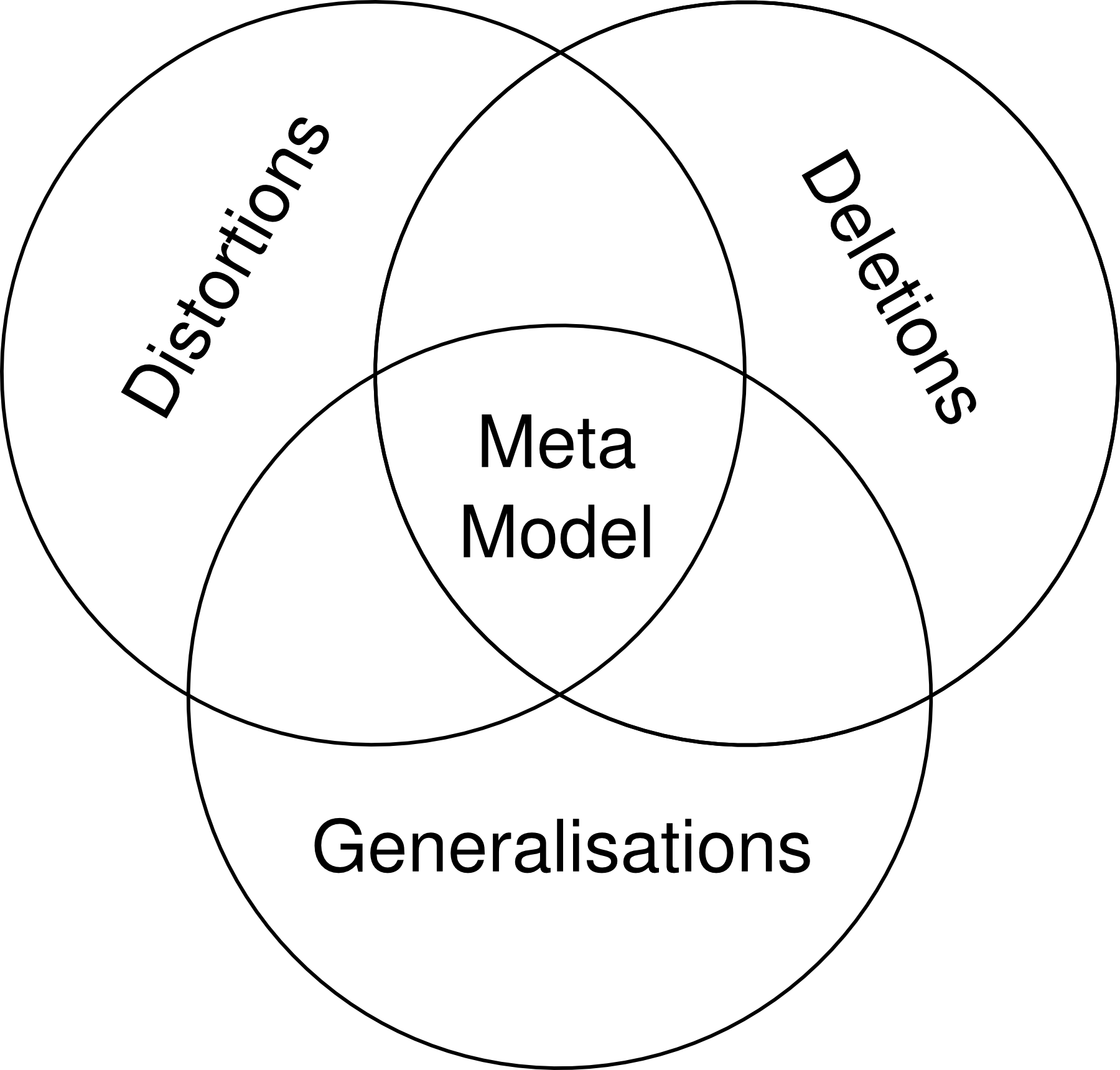
The Meta Model is the most powerful, and most misunderstood aspect of NLP. What's it all about?